Where Nigeria's pipelines stop, the gas supply business begins
Much of Nigeria is off the gas pipeline. A CNG sales lead explains why power pulls gas through, how it moves by road, and where professionals can play.

A Nigerian company built gas-fired captive power plants, proved the model worked, and then could not repeat it, because pipelines do not reach much of the country. So it began moving gas by road, which became a business of its own.
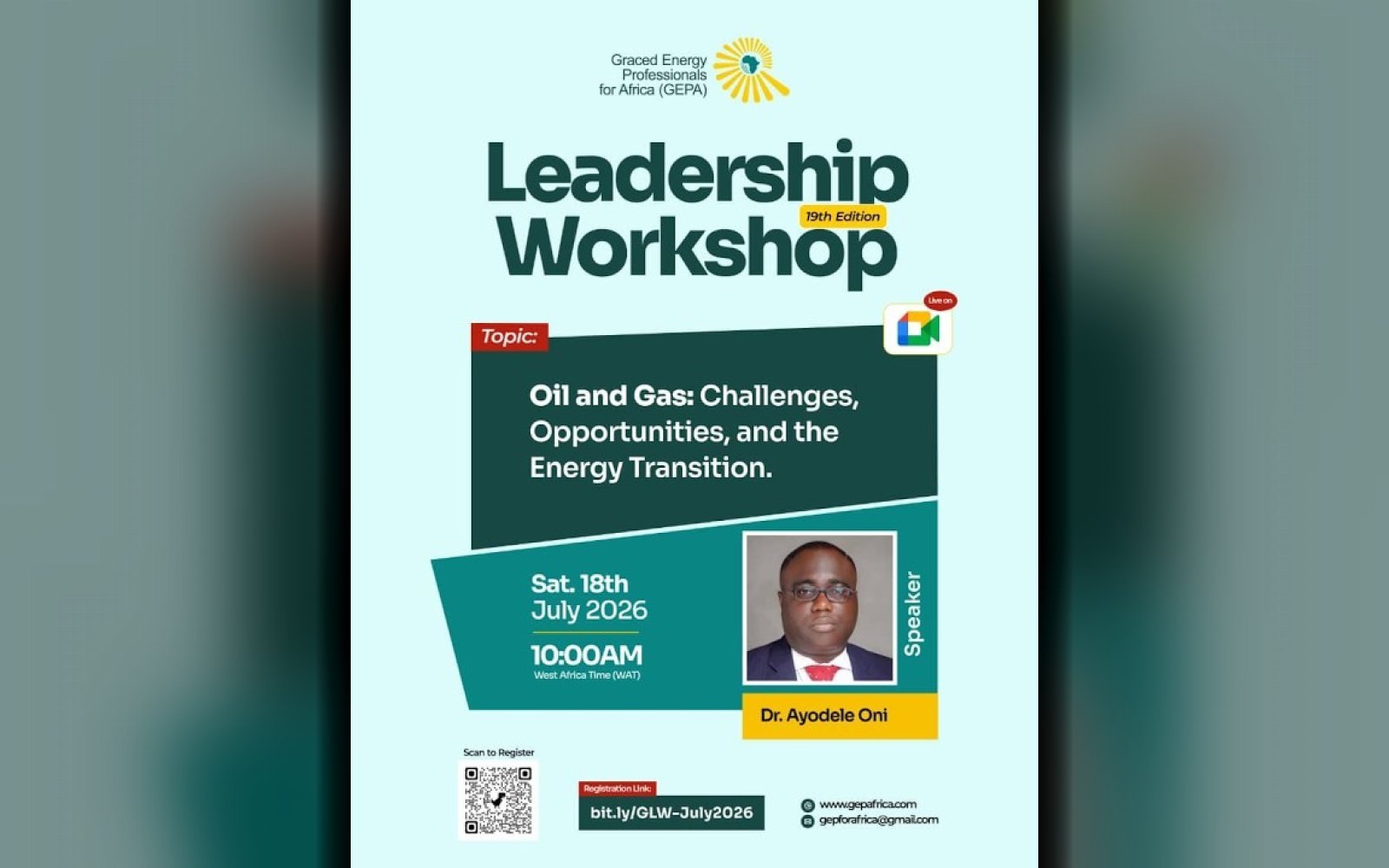
That story opened a talk at a GEPA leadership workshop on trends and opportunities in Nigeria's gas supply sector. The speaker, a regional sales lead at one of Nigeria's largest compressed natural gas (CNG) companies, argued throughout that every problem in the gas value chain is a business for whoever can solve it.
A gas nation short of power
Nigeria holds about 210 trillion cubic feet of gas, the ninth largest reserve in the world, and he calls it more a gas nation than an oil one. Power is the biggest gas consumer and the main driver of demand. Around 77 per cent of the country's generation runs on gas. Of roughly 13,000 megawatts of installed capacity, only 3,000 to 5,000 works, and not consistently. Industry now generates about 14,000 megawatts of its own power off grid, by a manufacturers' association's count. Factories that build their own power, like an eight-megawatt plant he visited in Abuja, need gas to run it, so new factories tend to arrive as new gas customers.
Where the pipeline ends
Each link in the power value chain carries its own problem, from crude theft to missing infrastructure. The biggest blockage is payment. Power sector buyers default on gas bills and ignore contract terms, so investment stays away from supply infrastructure.
Where pipeline does arrive, factories and jobs follow, which is why industry has clustered along the western corridor. The northern pipeline has cleared its river crossing but has yet to reach Kaduna and Kano. For now, he says, the benefits of gas stop roughly between Kogi and Abuja.
Gas on wheels
Off the pipeline, gas travels by truck, in what his company calls a virtual pipeline. It arrives in skids at around 250 bar, while a generator or boiler needs millibar, so a site must install a pressure reducing and metering system. Operators have grown from five or six to around twenty, and each new mother station brings jobs at every skill level.
Volume per trip, and so distance, shapes the choice between LNG and CNG. One LNG delivery carries about six times a CNG load of roughly 7,000 cubic metres, which is why LNG is growing in the north and CNG in the west. Transport is the newest demand: one industrial group recently bought 4,000 gas-powered trucks, and at fifteen to twenty minutes a fill, serving them takes many stations. For a logistics operator, the case is plain:
- Under a federal arrangement, CNG costs about 450 to 650 naira per standard cubic metre, against the 1,000 to 1,150 naira operators were paying for diesel.
- It ends drivers' theft of diesel.
- It spares engines the damage done by adulterated diesel.
Pricing, safety and where you fit
In the questions, he argued for market pricing. CNG once sold at 280 and then 380 naira when the real transport price was around 600 to 650, and because those prices were government supported, the sector could not expand. With willing-buyer, willing-seller pricing, he expects stations to multiply.
Gas itself is safe, he says; the risk lies in equipment. An LPG tank is rated at seven to eight bar and CNG needs at least 200, so the midstream and downstream regulator and the presidential CNG initiative restrict tank sales to approved sellers. Asked about a regional LNG-to-CNG depot, he said the model has value and is already used where CNG is unavailable, but was cautious about building one now for Abuja, Kano or Kaduna. Every gas business case is volume-based, he noted, and while only trucks drive transport demand, he saw it as a business for later.
His advice to young professionals: do not wait for an internship to be advertised. Walk into the companies, factories and mother stations with a skill set the industry needs.
He treats the sector's challenges as openings, and asks each listener to decide where to play: as employee, consultant or operator.