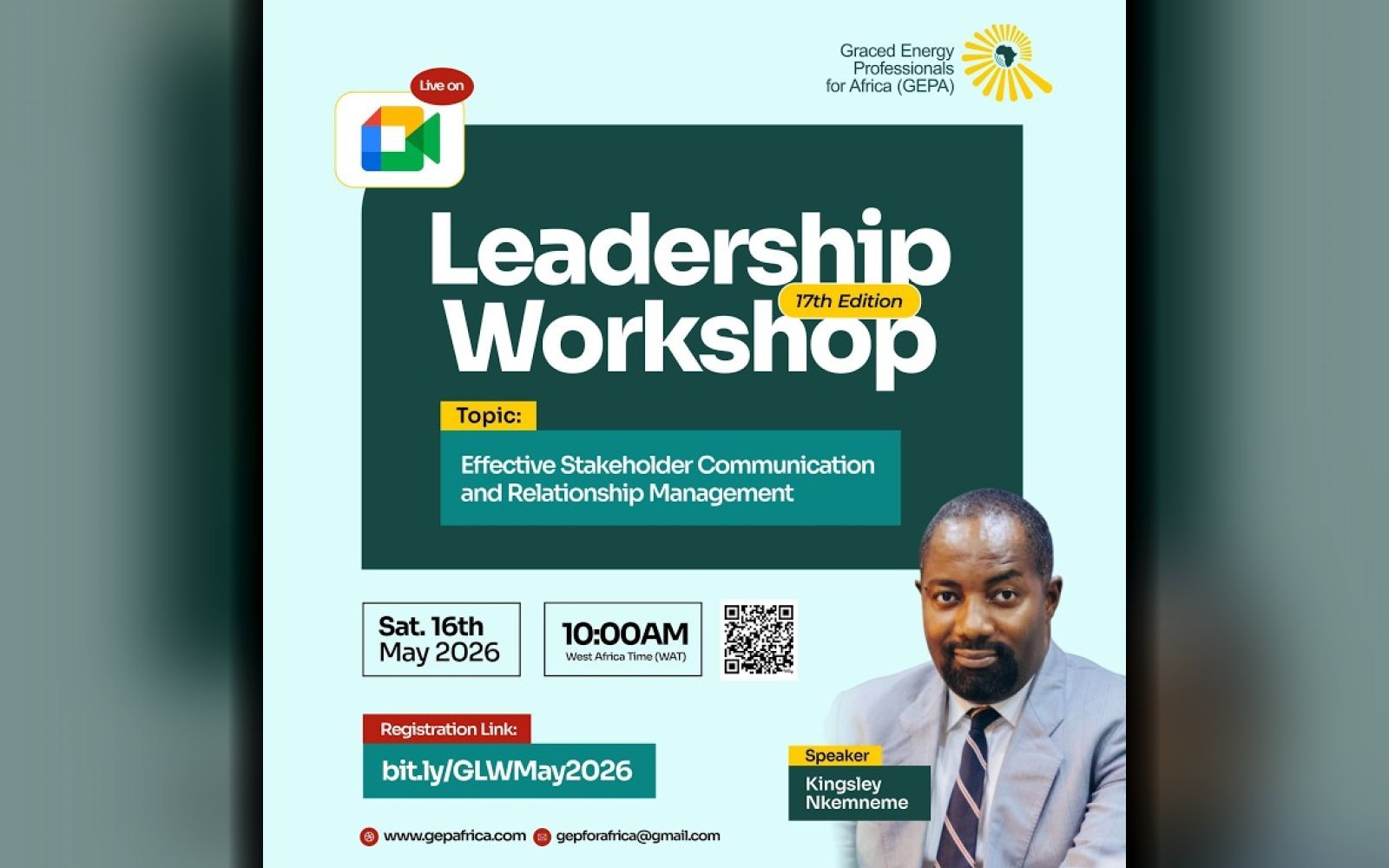
Six unseen pillars that hold up a career or a business
Dr Luka Satlong King, a medical doctor and pastor, argues that visible success rests on six pillars nobody sees, from vision and character to priesthood and the prophetic.
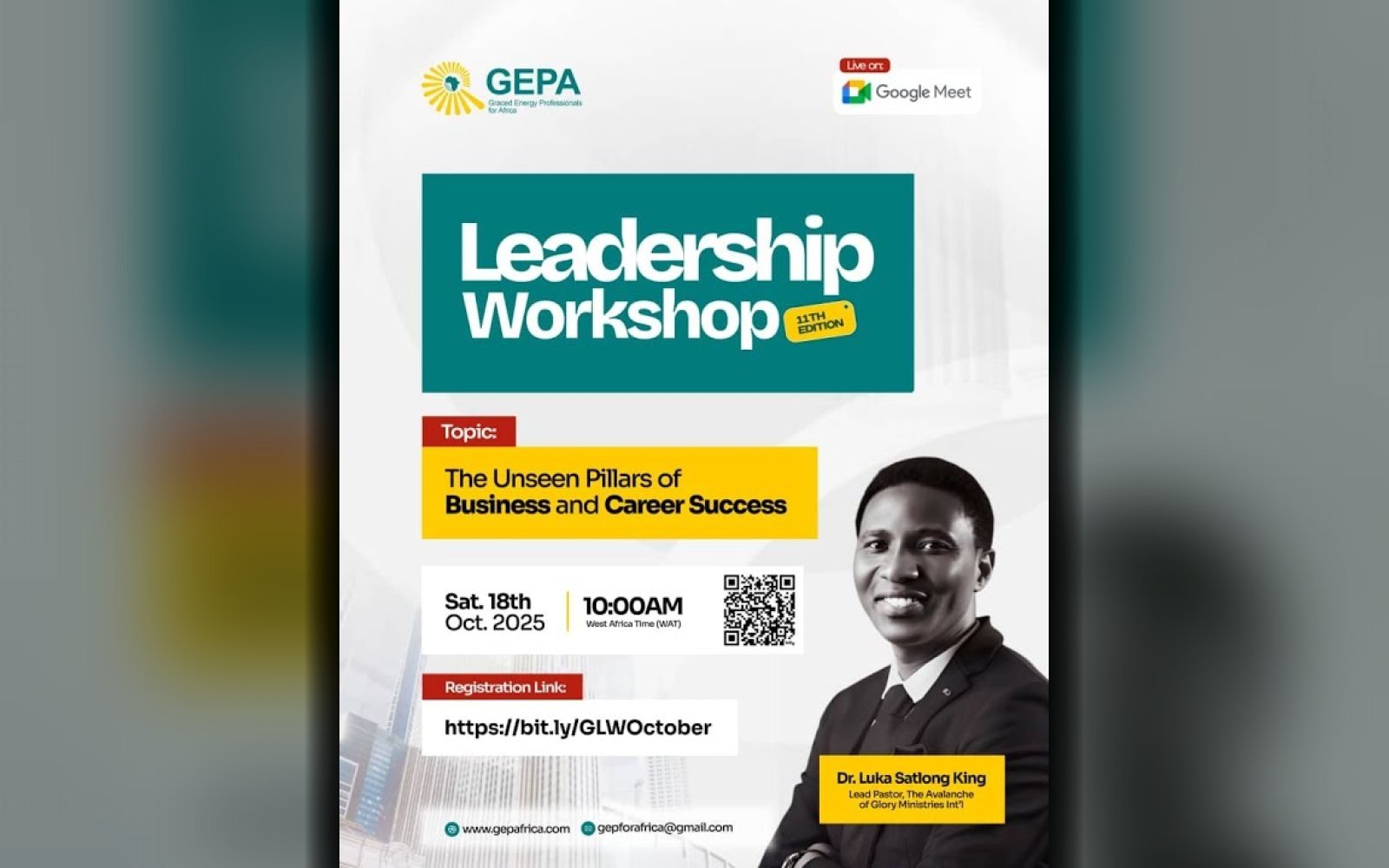
A building shows its walls, not the pillars holding it up, and the same is true of a career or a business. Dr Luka Satlong King, a trained medical doctor and lead pastor of Avalanche of Glory Ministries International, asked a GEPA leadership workshop to look underneath. Every business and career, he argued, stands on pillars nobody sees, much as the skeleton frames the human body.
His frame is explicitly Christian throughout, though he describes the first five pillars as natural laws.
Being comes before doing
The last of the terms King defines is success. His preferred definition is the discovery, pursuit and fulfilment of God's will and purposes for your life. His second is making a difference in your world by first becoming a person of value, because you cannot give what you do not have. His third is daily: meeting goals that sit within those purposes.
His shorthand for the order is be, do, have: who you are shapes what you do, and what you do decides what you get. Reading Joshua 1:8, he separates good success from bad, the bad kind being anything gained outside God's word and will. Nor is success magical or mystical, he argues. It answers to laws that have to be understood and applied.
Vision and competence
The first pillar is a clear and compelling vision, which King calls the mother of movements. Vision draws people and their resources because it carries the hope of a better future. Meditated on, it becomes conviction, then passion, then inspiration, and inspiration becomes influence, his one-word definition of leadership. From Habakkuk 2, he sets out four steps:
- Write it down, plainly and simply.
- Attach a strategic plan and an action plan.
- Communicate it until the team sees its own part in it and takes ownership.
- Run with it, with persistence, patience and perseverance.
The second pillar is competence: the right knowledge, skills, mindset and attitude to do a task well. You cannot perform beyond your level of competence, King says, so you train up in order to go up. Excellence advertises itself. Joseph reached Pharaoh because the butler recommended him, and the butler recommended him because he was competent.
Character, courage and consistency
Character is the basis of trust, and trust is social capital. However competent you are, King argues, people will not trust you without it. In Nigeria's leadership, he said, he sees more of a character problem than a competence problem, and he called integrity one of the missing ingredients in leadership across Nigeria and Africa. The integrity he asks for is moral, financial, sexual, verbal and ethical, with product and service integrity for an organisation.
Courage is the ability to dare and do big things in the face of fear. King ranks it above brilliance: challenges are certain, so a courageous person will go further than a brilliant one who lacks it. Fear of failure, of success and of other people's opinions is what leaves good plans on paper.
Consistency follows from what he calls the law of process. Success comes over time, not overnight, and people who abandon an effort at the first opposition never arrive. His instruction is to keep showing up, sales or no sales.
The pillar he calls spiritual
The sixth pillar, King says, is spiritual: commitment to priesthood practices and to the prophetic. He treats the marketplace as a highly spiritual environment, so good business practice alone is not enough. Abraham ran a cattle business and was no pastor, yet built four altars. Priesthood, in King's account, means prayer, fasting and intercession, worship and praise, giving, and complete obedience to God's word.
A participant raised the practical problem: how does a professional with a demanding nine to five fit prayer and fasting into the working week? King's answer was to go mobile: stay conscious of prayer through the day and use every short break at work rather than waiting for free time, then pray for longer at weekends.
The full course, taught from the workshop recording, is in the catalogue. It includes the rest of that discussion, where the host and a participant describe their own habits.