Why capable energy professionals stall, and the eight C's that get them moving
Firefighting, slow promotion and one-skill careers keep capable energy professionals stuck. Wilson Obeneme's answer starts with leading yourself before any title arrives.

Plenty of capable people in Africa's energy sector are not short of talent or effort. They work long weeks, yet feel stuck: held in one role for years, known for one skill, spending every day on the emergency in front of them.
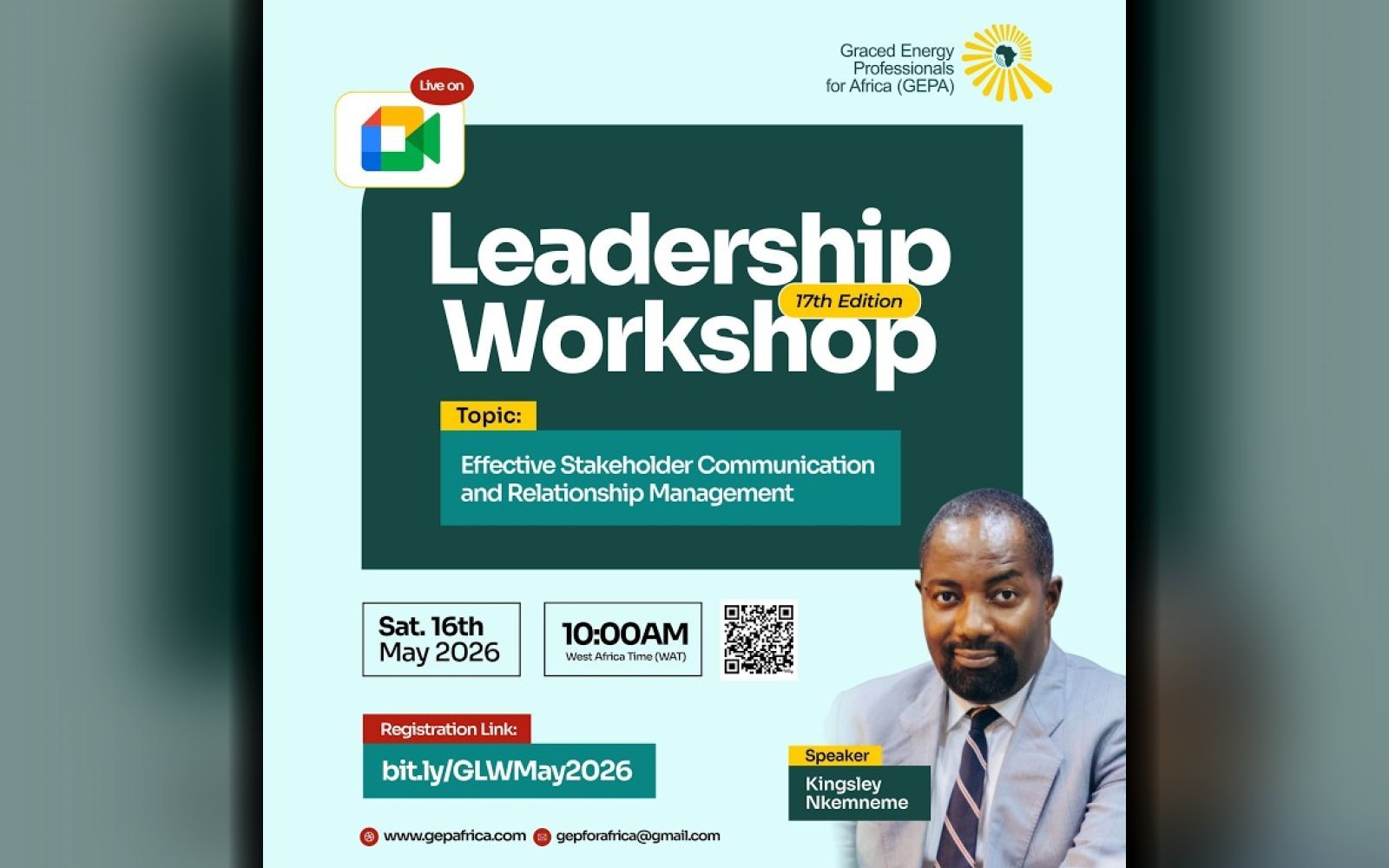
That was the subject of a GEPA leadership workshop led by Wilson Obeneme, an energy consultant specialising in digitalisation and production, and a productivity coach. He opened on scale: more than 600 million Africans still have no electricity, which he reads as a huge opportunity rather than only a sad statistic.
What keeps capable people stuck
Obeneme names four conditions, several from his own experience. The first is a firefighting culture: the sector cannot yet meet demand, so people work around the clock on today's problem and few get time to think strategically. The second is processes that slow the adoption of technology and breed a fear of trying anything new.
The third is being locked into the skill set you joined with, so that a reservoir engineer is expected to stay one. The fourth is a slow ladder. Obeneme was recognised as a top performer year after year and still told to stay put, because nobody else would do the work if he moved. His advice is to solve the problem rather than resign automatically, or you lose your fire.
Two mindsets do as much damage, starting with hard work without smart work. Sixty hours a week, Obeneme says, is already more than anyone should work, and he has seen colleagues develop chronic conditions from years of it. He once had to leave the pulpit before a Sunday Bible study to take his boss's emergency call. It got results, and it was not sustainable.
The second is waiting for a title before behaving like a leader. You are a leader, Obeneme argues, once people follow you. Six months into one organisation, still labelled a trainee, he had core engineers following his lead because he saw problems that needed solving.
Leading by design
At the centre is Obeneme's framework, the eight C's of leading by design. Its premise is that you cannot lead others until you have led yourself. Living by default means taking the path everyone takes; living by design means shaping your own.
- Clarity: knowing your three greatest strengths and what you intend to do with them.
- Courage: heading where you need to go when it is not the obvious path. Obeneme left a company he still recommends because staying would not take him there.
- Consistency: which, he says, is what productivity actually is.
- Capacity: faith is no cover for a lack of it. He cites the instruction to be fervent in prayer and not slothful in business.
- Collaboration: he would rather be one of those who made a thing succeed than the one who built it.
- Commitment: accountability, which for him means meeting a mentor every week.
- Credibility: people cannot draw from your well if they do not know you exist. That means giving others something worth consuming, not posting at random.
- Creativity: solving problems without waiting to be coaxed, or finding someone who can.
Four things to start this week
Obeneme's first step is to define the value you want to create in the energy industry. Most people answer with a job title, and a title is not a value. Clarity on value shows which organisations fit, or whether to start something yourself. Turn it into a ninety-day sprint with one action a week, and say no to what does not align.
Second, design your ideal week. Weekly planning, done on a Sunday, is the cycle he has seen work best: daily is too frequent, quarterly too late to change course. Third, use AI and other tools to strip out routine work through templates, rules and workflows. Fourth, collaborate, which he says has added more to his own productivity than anything else.
The full course, taught from the workshop recording, is in the catalogue. It also covers his ladder of productivity profiles, the trends he expects to shape the sector, and how people with many talents find one direction.